Wednesday, December 10, 2008
Blog 9 Natural Disaster
Our point system is blown way out of proportion, I believe. I don't believe that the more stamps you accumulate the better student you are. I mean, it's so easy for someone to get something stamped, especially with papers that they would soon not even look at. Sure there are tests to measure our progress, but the weight of the stamps greatly dominates the grading scale. Therefore, one doesn't need to do very well on tests, and still be able to get a high grade. This therefore does not accurately measure of the knowledge that goes into someone's head. It is much better, I believe, to give out homework that will be proportionately divided by points by importance. Therefore, there is a much more accurate account of learning. There is also the issue of hands-on learning. That should be graded based on the effort put into the work. I know, I'm being blasphemous. Please forgive me. I only wish to have a good grade in class. Thank you!

Wednesday, December 3, 2008
Blog 8 The Muscle Song

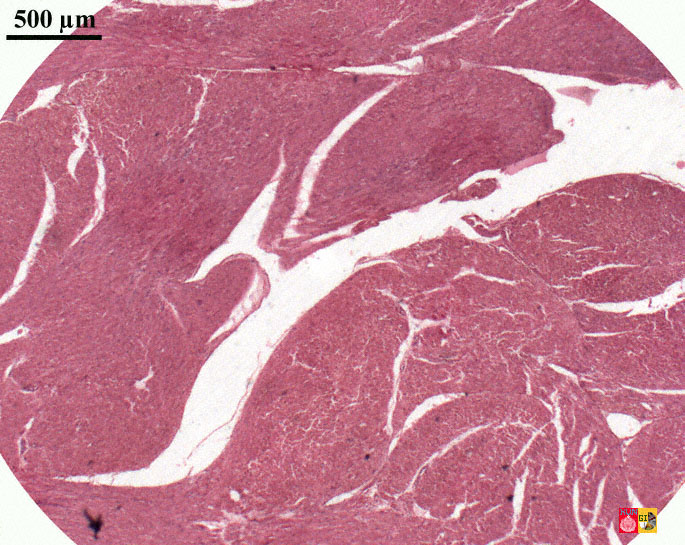

The Muscle Song was very informative on the positions of the muscles and their functions. In the first verse the song states the obvious, provided that muscles are everywhere. The are about 600 different muscles in our bodies, and they fit into 3 main categories: skeletal, smooth, and cardiac. A muscle that works in our cheeks is called the masseter. It allows the person to speak and smile, pulling the facial skin with it. To be able to look from side to side, or rotate, the head utilizes the stenomastoids. The head is attached to the shoulders by the strong trapezius muscle. To lift our arms we use our deltoids. In our arms we have biceps and triceps. The pectorals in the chest are what connects the sternum to the humerus. The biggest muscle in our body is the latissimus dorsi in our back. The quadriceps are in the thigh, and are the strongest muscles in our body. The calf muscle is the gastrocnemius. Our butt is composed of the gluteus maximus. Smooth muscles make up our organs and blood vessels. The cardiac muscle is what the heart is made of.
Wednesday, November 26, 2008
Blog 7 Bone Health
Bone health is dictated by numerous factors, including calcium levels and hormone levels. We consume milk because it provides a good source of calcium. Calcium is absorbed by the bone and makes the bone harder. This usually prevents them from breaking too easily. But as aging progresses calcium is either in short supply or not absorbed as readily. This leads to bone diseases like osteoporosis. If the cartilage at the ends of the bones are not continouosly regenerated, arthritis can result. Hormone levels dictate the growth and destruction of bones because of the calcium levels. Exercising puts stress on the muscles on the bone, which let's them adapt and grow even better. If a person neglects exercise, it is much easier for the bones to break or the muscles attached to them to tear. Eating the right foods will give the body the needed nutrients to build and maintain strong bones.
Monday, November 17, 2008
Blog 6 Structure and Function of Bones
Bones are the framework of our body. Without them, we would be but gelatinous globs of muscle and skin. Bones are characterized by their shapes and functions, so it is fitting that they are placed into 4 categories: long, short, flat, and irregular. The muscles that allow us movement are attached to our bones. Bones are also protective units for our body's soft insides, such as the organs and the brain. When the bone is fractured, it can heal itself through a reconstruction process. All in all, the bones of our body shape the way the body looks, and how it performs day to day duties.
Wednesday, October 22, 2008
Blog 5 Mathematics in the Body
Math is an intergral part in the learning and understanding of the concepts of anatomy. Math is used to determine relative size of cells, tissues, etc. Many of these things are much too small to compare to anything else (i.e. as big as an airplane, thin as paper, etc.). Math is used to calculate the timing of our bodily movements. Many diseases slow reaction rate of a person, and math is used to detect these changes. The amount of anything in our body is usually at a set amount. Too much or too little of anything can prove detrimental to the health of our bodies. White blood cell count and the number of bones during childhood compared to adulthood are all put into a mathematical sense. Math is used in the description of bodily motion, i.e. a 45 degree tilt at the pelvis, or a flexion at the elbow of 10 degrees, etc. Heart rate, time it takes for a stimulus to be reacted to, etc. are all things that involve math in anatomy. The measurement of depth, such as for incisions for dissection or making slides for the microscope take math into account. And lastly, proportionality is something a healthy body needs, and math is a key tool to see if our body is in its best shape.
Saturday, October 11, 2008
Blog 4 Current Event
In a study carried out by Oncken and colleagues revealed that the use of nicotine gum by pregnant women is helpful in a way. Smoking can cause a premature birth or a low-birthweight baby being born. The study put two groups into observation. One was given the nicotine gum and the other a placebo gum. The main thing was to get smoking women to reduce the amount of cigarettes smoked during the time of pregnancy. The group that received the nicotine gum averaged a loss of 5.7 cigarettes per day. The placebo group exhibited a loss of only 3.5 cigarettes a day. The infants from mothers in the nicotine gum group were significantly heavier than those in the placebo group, on average. Still, Oncken and colleagues recommended not to use the gum regularly on a daily basis during a pregnancy because of evidence that the nicotine can cause cell anamolies that may cause sudden infant death syndrome.
http://www.revolutionhealth.com/articles/nicotine-gum-has-benefits-in-pregnant-smokers/reut-20081007elin023
http://www.revolutionhealth.com/articles/nicotine-gum-has-benefits-in-pregnant-smokers/reut-20081007elin023
Sunday, October 5, 2008
Blog 3 - Tissues
The phrase "fearfully and wonderfully made" can apply to the construction, maintenance, and the overall structures and functions of tissues. There are two basic types of tissues: epithelial and connective tissues. Epithelial tissues are divided into 2 categories: simple or stratified. In each, they can also be categorized into 3 more groups: squamous, cuboidal, or columnar. By now, we can see that the great amount of tissues that make up our body are quite complex. The epithelial tissues have an apical surface that borders a lumen or cavity of which the tissue surrounds, and a basement membrane. How the cells of these tissues know what to do and where to produce themselves is quite complex, hence"fearfully made". The connective tissues are the "wonderful" tissues because they connect body parts. Instead of having almost no blood supplied to them, these tissues are mostly vascularized, with an exception to the tendons and ligaments. These tissues form the shape of our bodies, allow us to move with fluidity and grace, at least for most people. Tissues also know how to fix themselves quite well. If damaged, they do either of two things: regenerate cells of the same type of tissue that was injured, or the use of fibrosis which forms scar tissue. Which type of recovery occurs is based on the body's perception of the type of tissue that was damaged and the severity of the damage. Thus, our tissues know very much on how to heal itself as well as building itself into complex organs that allow our bodies run the way they do everyday.
Wednesday, September 24, 2008
Blog 2 - Summary of Health Article
http://www.revolutionhealth.com/articles/alcohol-use-may-cut-heart-failure-with-hypertension/reut-20080922clin018
Research had shown that high consumption of alcoholic beverages by people with high blood pressureled to cardiomyopathy. However, this study was trying to find the effect of consuming small to moderate amounts of alcoholic beverages on heart failure for people with hypertension. The subjects' average age was 58 years. They were followed for about 18 years. The results showed that those who drank in small amounts (1-4 drinks per week) were 11% less likely to develop heart failure. Those who drank in moderate amounts (8 or more drinks per week) got up to a 62% less chance to develop heart failure. Alcohol's "diuretic effect can prevent volume overload". This news is good for those who have hypertension and like alcoholic beverages. This way, they can help improve their chances of not getting a heart failure-related accident just by drinking their drink in moderate amounts.
Research had shown that high consumption of alcoholic beverages by people with high blood pressureled to cardiomyopathy. However, this study was trying to find the effect of consuming small to moderate amounts of alcoholic beverages on heart failure for people with hypertension. The subjects' average age was 58 years. They were followed for about 18 years. The results showed that those who drank in small amounts (1-4 drinks per week) were 11% less likely to develop heart failure. Those who drank in moderate amounts (8 or more drinks per week) got up to a 62% less chance to develop heart failure. Alcohol's "diuretic effect can prevent volume overload". This news is good for those who have hypertension and like alcoholic beverages. This way, they can help improve their chances of not getting a heart failure-related accident just by drinking their drink in moderate amounts.
Wednesday, September 17, 2008
Why I'm Interested
I am Frankie Ngo. I've had an interest in the human body from a very young age. I can only describe it as something that I find interesting on some days and only on those "some days". Anatomy, for me at least, is not as interesting as biology, or astronomy. But anatomy does provide me information about the body that I control. I am also wishing to pursue a career in the medical field, the dental field more specifically. I am very sure that this class will prove useful, if not indefinitely beneficial towards my endeavor. That being said, I only wish to absorb as much as I can from this course before heading off to college. Cheers.
Subscribe to:
Posts (Atom)