Saturday, March 28, 2009
Blog 13: The Mechanisms that Control Breathing
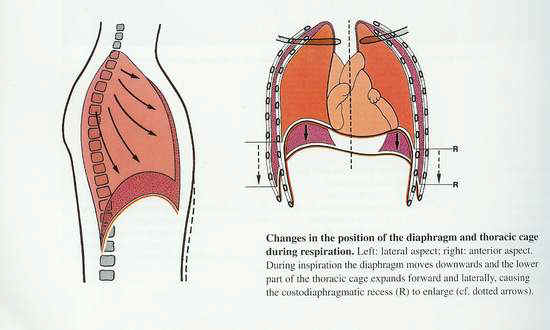
There are several mechanisms that control breathing. The brain, the diaphragm, as well as air pressure play roles in the regulation of breathing. Our breathing is a involuntary action. The brain regulates how much air our body needs to stay in homeostasis. Factors like physical, emotional, or chemicals all affect the breath rate. When one is scared, or in the flight module of the fight or flight concept, chemicals are released in the body, such as adrenaline. Breathing becomes faster, more shallow, to allow more oxygen intake at a higher rate to maintain the high alertness of the sensory components. The diaphragm is a dividing tissue that is located just under the lungs. When someone breathes, the diaphragm either goes up (contracting), or down (stretching). When we breathe in, the diaphragm moves down, to increase the volume of the lungs, allowing more air to come in. When we breathe out, the diaphragm moves up, making less room for the lungs. Air pressure plays a role in the exhalation process. When we breathe in a lot of air, our lungs have more air pressure than the air does outside the body. Because of this, the air will move from the highest pressured area to the lower one. Thus, we breathe out, which doesn't require as much effort as breathing in.


Subscribe to:
Post Comments (Atom)


No comments:
Post a Comment